


Your shopping cart is empty!
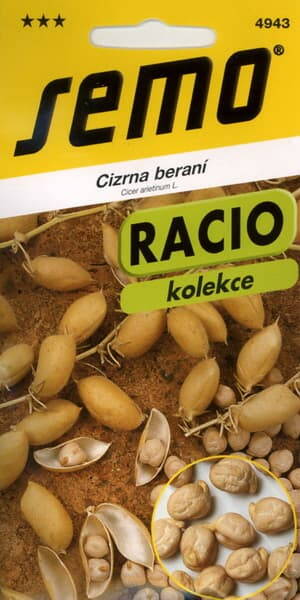
Chick pea "Ares" (1 kg)
Prof Pack
New

Chick pea "Ares".
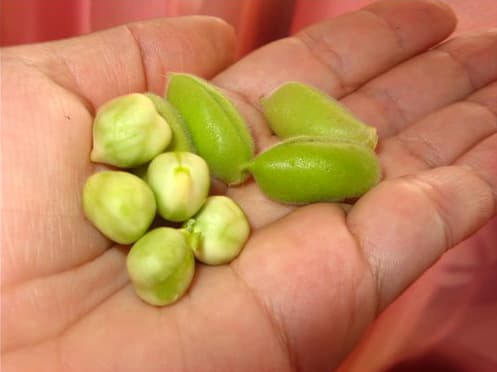
It is an annual plant, erect stem 20-70 cm high, covered with glandular hairs. Leaves are pinnate. Pods are short, swollen, 1-3 seeds. Seeds look like the head of a ram or an owl, have a tuberculate-rough surface, color from yellow to black. The mass of 1000 seeds, depending on the variety, ranges from 150 to 300 g. Chickpea is a self-pollinating plant, pollination takes place in the phase of a closed flower.
1,0 g = 3-5 seeds.
It is an annual plant, erect stem 20-70 cm high, covered with glandular hairs. Leaves are pinnate. Pods are short, swollen, 1-3 seeds. Seeds look like the head of a ram or an owl, have a tuberculate-rough surface, color from yellow to black. The mass of 1000 seeds, depending on the variety, ranges from 150 to 300 g. Chickpea is a self-pollinating plant, pollination takes place in the phase of a closed flower.
1,0 g = 3-5 seeds.
Biological features.
The growing season ranges from 90-110 days for early-ripening varieties (up to 150-220 days for late-ripening varieties).
Chickpeas are a more heat-loving crop than peas and lentils. Seeds begin to germinate at temperatures of +3+5°C, and seedlings can withstand short-term frosts up to +8+11°C.
Increased heat requirements are imposed during the flowering period - the formation of beans; the optimal temperature during this period is +24+28°C.
Chickpeas ripen better when the air temperature at night is not lower than +14+15°C. Chickpeas tolerate air and soil drought, but cannot tolerate excessive moisture.
During prolonged rainy weather, flowering is delayed and diseases appear (ascochyta blight, fusarium blight). Flowering occurs better at air humidity of 60%.
Chickpeas are a long-day crop.
Mainly white-seeded varieties are used for food; soups and porridges are prepared, but it takes much longer to cook than lentils and peas. The roasted seeds taste like nuts.
The seeds contain 20-29% proteins, 4-7% fat, 50-60% carbohydrates.
The stems and leaves of this crop contain a significant amount of oxalic and malic acids, which does not allow the use of straw and green mass for feeding animals other than sheep.
The average seed yield is 0.6-0.8 t/ha. Undemanding to soils.
Features of crop rotation.
Chickpeas are not very demanding on precursors, but at the same time they are a good precursor for many cereal grains and row crops.
The seeding rate for the continuous row method is 0.7-0.9, for the wide-row method - 0.3-0.5 million viable seeds per 1 ha, or 120-250 kg/ha.
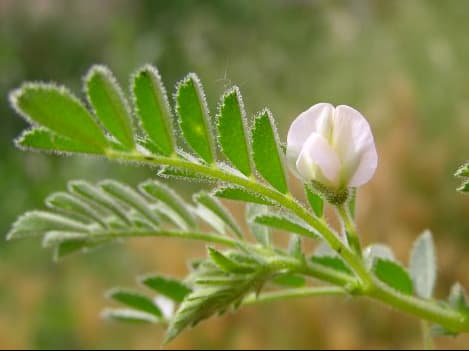
Chick pea. Bot.: Cicer arietinum.
Preparation method: put dried chickpeas (garbanzo beans) in a saucepan, cover with water and soak overnight.
Drain and rinse, then cover with water again and bring to a boil; cook for 1-1.5 hours until tender. Add salt to taste 5 minutes before it is ready. Drain the water - the chickpeas are ready. Add onions and the panch phoron spice mix and fry, or add to other ready-made dishes.
Chickpea seeds are usually boiled, fried, added to soups, pilafs, used as side dishes, and also for making patties and cutlets (falafel).
Small cutlets are prepared from roasted crushed seeds mixed with raisins, sesame seeds or walnuts.
Chickpeas are also used in the manufacture of canned food, which are highly nutritious and have good taste.
Flour is made from chickpea seeds, the addition of which (in an amount of 10-20%) to wheat flour when baking bread and making confectionery and pasta increases the nutritional value and taste properties of these products. Porridge for baby food is prepared from chickpea flour in pure form or mixed with powdered milk.